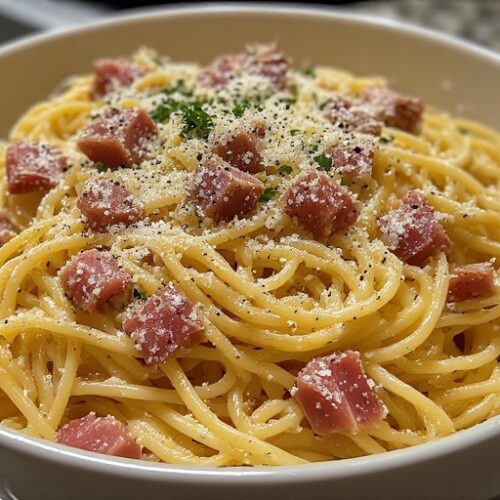
Spaghetti Carbonara

Spaghetti Carbonara is a classic Roman pasta dish made with eggs, Pecorino Romano cheese, guanciale, and black pepper. With only a handful of ingredients, it creates a rich and silky sauce that coats every strand of pasta without using any cream.
Equipment
- large pot for boiling pasta
- large frying pan or skillet
- medium mixing bowl
- whisk or fork
- tongs or pasta fork
- cheese grater
Ingredients
- 400 g spaghetti
- 150 g guanciale, cut into small cubes or strips
- 2 large whole eggs
- 2 large egg yolks
- 1 cup finely grated Pecorino Romano cheese (about 90–100g)
- 1 tsp freshly ground black pepper, plus extra for serving
- salt, for the pasta water
- 1/2 cup reserved pasta cooking water (optional)
Instructions
- Prepare all ingredients before cooking. Finely grate the Pecorino Romano cheese, cut the guanciale into small cubes or strips, and crack the eggs into a mixing bowl. Add the extra egg yolks and set aside.
- Bring a large pot of water to a rolling boil. Add salt until the water tastes lightly salty like the sea. Cook the spaghetti according to package instructions until al dente. Reserve about 1/2 cup of pasta cooking water before draining.
- While the pasta cooks, place the guanciale in a large frying pan over medium heat. Cook slowly, stirring occasionally, until the fat renders and the meat becomes golden and crisp, about 6 to 8 minutes.
- In the bowl with the eggs and yolks, add the grated Pecorino Romano cheese and freshly ground black pepper. Whisk thoroughly until the mixture becomes smooth, thick, and creamy.
- Using tongs or a pasta fork, transfer the cooked spaghetti directly into the pan with the guanciale. Allow a little pasta water to come along with the noodles.
- Toss the spaghetti with the guanciale over very low heat for about 30 seconds so the pasta becomes coated with the rendered pork fat. Then remove the pan completely from the heat.
- Pour the egg and cheese mixture over the hot pasta. Immediately toss and stir continuously with tongs so the heat from the pasta gently cooks the eggs and forms a creamy sauce.
- If the sauce is too thick, add a small splash of the reserved pasta water and continue tossing until the sauce becomes smooth, glossy, and evenly coats the spaghetti.
- Taste and adjust seasoning if needed. Divide the pasta among bowls and finish with extra Pecorino Romano and freshly cracked black pepper. Serve immediately.
Notes
For the most authentic flavor, use guanciale rather than pancetta or bacon. Always remove the pan from the heat before adding the egg mixture to prevent scrambling the eggs. Reserve some pasta water before draining the pasta, as the starch helps create a smooth and creamy sauce. Freshly grated Pecorino Romano melts more smoothly than pre-grated cheese.
Carbonara is best enjoyed immediately after cooking. If leftovers are stored, keep them in an airtight container in the refrigerator for up to 1 day and reheat gently with a splash of water, though the texture will not be as creamy as when freshly made.