Introduction
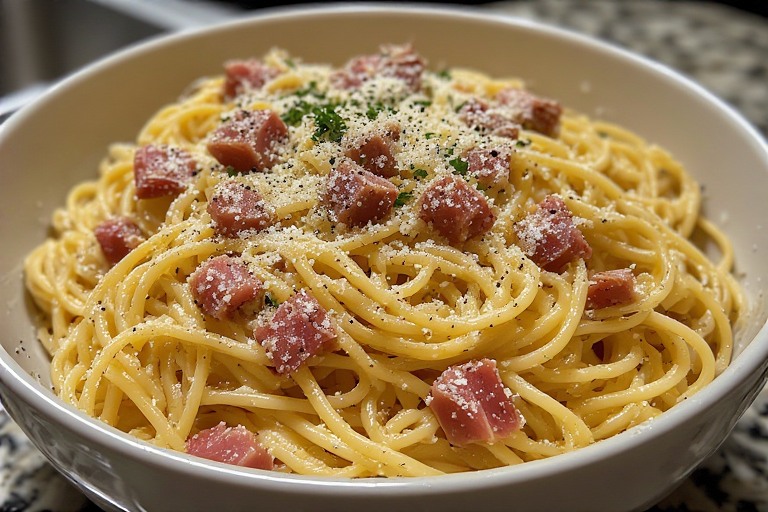
Spaghetti Carbonara is one of the most beloved pasta dishes to come out of Rome. What makes it so remarkable is how a handful of humble ingredients can come together to create something so rich, comforting, and deeply satisfying. There are no complicated techniques and no long list of ingredients. In fact, the entire dish relies on just a few carefully chosen components: eggs, Pecorino Romano cheese, guanciale, black pepper, and perfectly cooked pasta.
The beauty of carbonara lies in its simplicity and technique. When made correctly, the eggs and cheese transform into a silky, creamy sauce that coats every strand of spaghetti. There is no cream involved at all. The creaminess comes entirely from the emulsification of eggs, cheese, rendered pork fat, and a little starchy pasta water.
Traditionally, guanciale is used, which is cured pork jowl. It has a rich, delicate flavor and melts beautifully into the sauce. Pancetta can be used if guanciale is difficult to find, but the authentic Roman version always calls for guanciale.
This dish comes together quite quickly once the pasta is cooked, so having everything prepared and ready beforehand makes the process much smoother. It is the kind of recipe that feels both rustic and elegant at the same time.
Ingredients (Serves 4)
- 400g spaghetti
- 150g guanciale, cut into small cubes or strips
- 2 large whole eggs
- 2 large egg yolks
- 1 cup (about 90–100g) finely grated Pecorino Romano cheese
- 1 teaspoon freshly ground black pepper, plus extra for serving
- Salt, for the pasta water
Optional but helpful:
- ½ cup reserved pasta cooking water
Equipment
- Large pot for boiling pasta
- Large frying pan or skillet
- Medium mixing bowl
- Whisk or fork
- Tongs or pasta fork
- Cheese grater
Instructions
1. Prepare the ingredients
Before starting to cook, prepare all of the ingredients. Carbonara moves quickly once the pasta is ready, so having everything ready to go makes the process much easier.
Grate the Pecorino Romano cheese as finely as possible. Finely grated cheese melts more easily into the egg mixture and helps create a smoother sauce.
Cut the guanciale into small cubes or short strips. Try to keep the pieces relatively even so they cook at the same rate.
Crack the eggs into a mixing bowl. Add the two extra egg yolks and set aside.
2. Boil the pasta
Fill a large pot with water and bring it to a rolling boil. Once boiling, add a generous amount of salt. The water should taste lightly salty like the sea, since this is the only chance to season the pasta itself.
Add the spaghetti and cook according to package instructions until al dente. The pasta should still have a slight firmness in the center because it will finish cooking slightly when combined with the sauce.
Before draining the pasta, reserve about half a cup of the pasta cooking water. This starchy liquid is essential for adjusting the consistency of the sauce later.
3. Cook the guanciale
While the pasta is cooking, place the diced guanciale in a large frying pan over medium heat.
There is no need to add oil because guanciale contains plenty of fat that will render out during cooking.
Allow the guanciale to cook slowly, stirring occasionally. Over the course of about 6 to 8 minutes, the fat will melt out and the meat will become golden and crisp around the edges.
Once the guanciale is nicely browned and slightly crispy, turn off the heat. Leave both the guanciale and the rendered fat in the pan, as this will form part of the base for the sauce.
4. Prepare the egg and cheese mixture
In the mixing bowl containing the eggs and yolks, add the grated Pecorino Romano cheese.
Add the freshly ground black pepper.
Whisk the mixture thoroughly until it becomes smooth and slightly thick. The mixture should look creamy and cohesive. The cheese should be well incorporated into the eggs.
Set this mixture aside until the pasta is ready.
5. Combine the pasta and guanciale
When the pasta is cooked, use tongs or a pasta fork to transfer the spaghetti directly from the pot into the frying pan with the guanciale. Allow a little of the pasta water to come along with it.
Place the pan over very low heat and toss the pasta with the guanciale so the noodles become coated with the rendered pork fat. This step adds flavor and helps prepare the pasta for the sauce.
After about 30 seconds of tossing, remove the pan completely from the heat. This step is extremely important.
6. Create the carbonara sauce
Once the pan is off the heat, pour the egg and cheese mixture over the hot pasta.
Using tongs, immediately begin tossing and stirring the pasta continuously. The heat from the pasta will gently cook the eggs and melt the cheese, forming a creamy sauce that clings to the spaghetti.
If the sauce appears too thick or slightly clumpy, add a small splash of the reserved pasta water and continue tossing. The starch in the water helps emulsify the sauce and gives it that silky texture carbonara is known for.
Continue tossing until the pasta is fully coated and the sauce becomes smooth and glossy.
7. Final seasoning
Taste the pasta and adjust seasoning if necessary. Because Pecorino Romano and guanciale are both quite salty, additional salt is often unnecessary.
Add another pinch of freshly cracked black pepper if you enjoy a stronger pepper flavor.
8. Serve immediately
Carbonara is best served immediately while it is still hot and creamy.
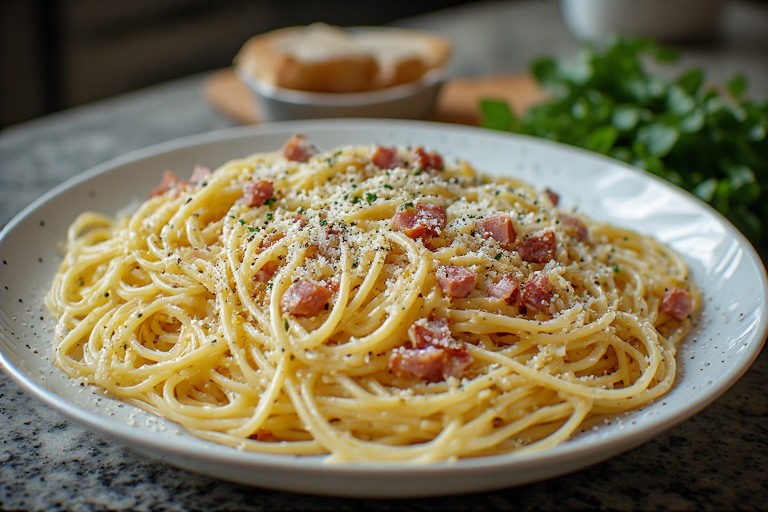
Divide the pasta among four bowls. Sprinkle each portion with a little extra Pecorino Romano and a final crack of black pepper.
Chef Tips
Use guanciale if possible. Its flavor is more delicate and traditional than pancetta or bacon.
Always remove the pan from the heat before adding the egg mixture. Too much heat can scramble the eggs instead of forming a smooth sauce.
Reserve pasta water before draining the pasta. This small step can save the sauce if it becomes too thick.
Freshly grated Pecorino Romano melts more smoothly than pre-grated cheese.
Storage
Spaghetti Carbonara is best enjoyed immediately after it is made. The sauce is delicate and can lose its creamy texture if reheated.
If leftovers must be stored, keep them in an airtight container in the refrigerator for up to one day. Reheat gently in a pan with a splash of water, though the texture will not be quite the same as when freshly prepared.
For the best experience, carbonara is always worth making fresh.
Spaghetti Carbonara

Equipment
- large pot for boiling pasta
- large frying pan or skillet
- medium mixing bowl
- whisk or fork
- tongs or pasta fork
- cheese grater
Ingredients
- 400 g spaghetti
- 150 g guanciale, cut into small cubes or strips
- 2 large whole eggs
- 2 large egg yolks
- 1 cup finely grated Pecorino Romano cheese (about 90–100g)
- 1 tsp freshly ground black pepper, plus extra for serving
- salt, for the pasta water
- 1/2 cup reserved pasta cooking water (optional)
Instructions
- Prepare all ingredients before cooking. Finely grate the Pecorino Romano cheese, cut the guanciale into small cubes or strips, and crack the eggs into a mixing bowl. Add the extra egg yolks and set aside.
- Bring a large pot of water to a rolling boil. Add salt until the water tastes lightly salty like the sea. Cook the spaghetti according to package instructions until al dente. Reserve about 1/2 cup of pasta cooking water before draining.
- While the pasta cooks, place the guanciale in a large frying pan over medium heat. Cook slowly, stirring occasionally, until the fat renders and the meat becomes golden and crisp, about 6 to 8 minutes.
- In the bowl with the eggs and yolks, add the grated Pecorino Romano cheese and freshly ground black pepper. Whisk thoroughly until the mixture becomes smooth, thick, and creamy.
- Using tongs or a pasta fork, transfer the cooked spaghetti directly into the pan with the guanciale. Allow a little pasta water to come along with the noodles.
- Toss the spaghetti with the guanciale over very low heat for about 30 seconds so the pasta becomes coated with the rendered pork fat. Then remove the pan completely from the heat.
- Pour the egg and cheese mixture over the hot pasta. Immediately toss and stir continuously with tongs so the heat from the pasta gently cooks the eggs and forms a creamy sauce.
- If the sauce is too thick, add a small splash of the reserved pasta water and continue tossing until the sauce becomes smooth, glossy, and evenly coats the spaghetti.
- Taste and adjust seasoning if needed. Divide the pasta among bowls and finish with extra Pecorino Romano and freshly cracked black pepper. Serve immediately.
Notes
Q&A
Can I use bacon instead of guanciale?
Yes, although it will slightly change the flavor. Traditional Roman carbonara uses guanciale because it has a richer, more delicate pork flavor and renders a silky fat that blends beautifully with the sauce. Pancetta is the closest substitute and is commonly used outside of Italy. Bacon can work in a pinch, but it is usually smoked, which gives the dish a noticeably different taste.
Why does authentic carbonara not use cream?
The creaminess in carbonara comes from the eggs, cheese, pasta water, and rendered guanciale fat emulsifying together. When tossed with hot pasta, the eggs gently cook and combine with the cheese to form a silky sauce. Adding cream is unnecessary and is generally considered non-traditional.
How do I prevent the eggs from scrambling?
The key is to remove the pan from direct heat before adding the egg mixture. The residual heat from the pasta is enough to cook the eggs slowly. Tossing the pasta continuously also helps distribute the heat evenly and prevents the eggs from curdling.
Why is pasta water important in carbonara?
Pasta water contains starch released from the pasta while it cooks. When added to the sauce, this starch helps bind the eggs, cheese, and fat together, creating a smooth and glossy texture. It also helps adjust the consistency if the sauce becomes too thick.
What type of pasta works best for carbonara?
Spaghetti is the most traditional choice and is commonly used in Rome. However, other long pastas like linguine or bucatini also work very well. The goal is to use a pasta shape that allows the sauce to cling to every strand.
Can I make carbonara ahead of time?
Carbonara is best made and eaten immediately. The sauce is delicate and tends to thicken or lose its silky texture if it sits too long. For the best flavor and texture, it should be served right after mixing the pasta with the sauce.
What cheese should I use?
Authentic carbonara uses Pecorino Romano. This sheep’s milk cheese has a sharp, salty flavor that balances the richness of the eggs and pork. Some people blend Pecorino Romano with Parmigiano Reggiano for a slightly milder taste, but traditional recipes rely solely on Pecorino.
Why add extra egg yolks?
Egg yolks contain more fat and help create a richer, smoother sauce. Using a combination of whole eggs and additional yolks gives the carbonara its signature creamy texture without making the sauce too heavy.
How do I know when the sauce is ready?
The sauce should coat the spaghetti evenly and look smooth and glossy rather than thick or clumpy. When you lift a small bundle of pasta with tongs, the strands should be lightly coated in the creamy sauce rather than sitting in a pool of liquid.
Can carbonara be reheated?
It can be reheated gently, but the texture will not be the same as when freshly made. If reheating, warm it slowly in a pan over low heat and add a small splash of water to loosen the sauce. Even with careful reheating, carbonara is always best enjoyed immediately after cooking.