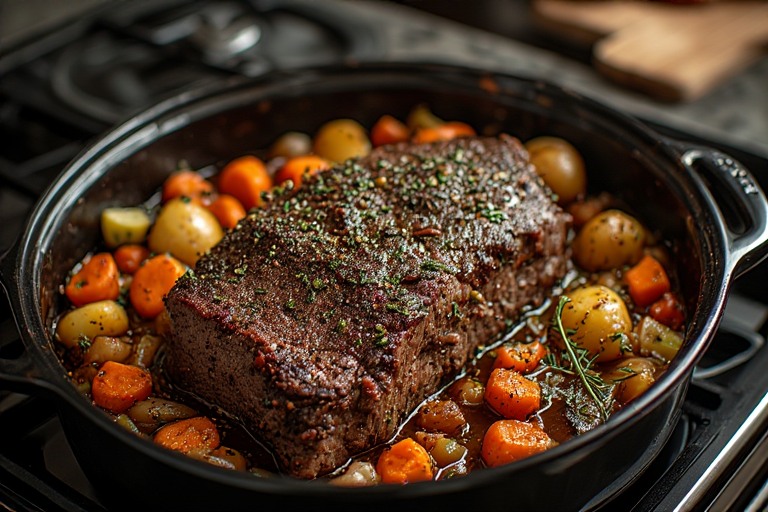
There are certain dinners that feel like they belong to a slower time. A pot roast is one of those meals. It fills the kitchen with the kind of aroma that makes people wander in asking when dinner will be ready. Rich beef, garlic, herbs, and vegetables all simmering together in one heavy pot until everything becomes tender and deeply flavorful.
This is the sort of recipe I make on a quiet afternoon when I want dinner to take care of itself. Once everything is in the pot, the oven does most of the work. Over the course of a few hours the beef becomes incredibly tender, the vegetables soak up the savory broth, and the sauce thickens into something that feels comforting and satisfying.
It is simple food, but when done well it feels generous and special. The kind of dinner that makes a table feel full and welcoming.
Ingredients (Serves 6)
For the Roast
3 to 3½ lbs (1.4–1.6 kg) beef chuck roast
2 teaspoons kosher salt
1 teaspoon freshly ground black pepper
1 teaspoon paprika
1 teaspoon dried thyme
1 teaspoon dried rosemary
2 tablespoons olive oil
For the Braising Base
1 large yellow onion, sliced
3 carrots, cut into large pieces
2 celery stalks, chopped
5 cloves garlic, smashed
2 tablespoons tomato paste
For the Braising Liquid
2 cups (480 ml) beef broth
1 cup (240 ml) dry red wine
2 teaspoons Worcestershire sauce
2 bay leaves
For the Vegetables
4 medium Yukon gold potatoes, peeled and cut into chunks
2 additional carrots, cut into thick pieces
For Finishing
2 tablespoons butter
1 tablespoon flour (optional for thickening)
Fresh parsley, chopped
Instructions
1. Prepare the Roast
Remove the beef from the refrigerator about 20 minutes before cooking. Allowing it to come closer to room temperature helps it cook more evenly.
Pat the roast dry with paper towels. Moisture prevents proper browning, so taking a moment here really helps.
Season the beef generously on all sides with salt, black pepper, paprika, thyme, and rosemary.
2. Sear the Beef
Preheat your oven to 160°C (325°F).
Heat the olive oil in a large Dutch oven or heavy oven safe pot over medium high heat.
Place the roast in the hot pot and sear it for about 4 to 5 minutes on each side. The goal is to develop a deep golden brown crust. This step builds the foundation of flavor for the entire dish.
Once all sides are nicely browned, remove the roast and set it aside on a plate.
3. Build the Flavor Base
In the same pot, add the sliced onion, carrots, and celery. Cook for about 5 to 6 minutes, stirring occasionally, until the vegetables begin to soften.
Add the smashed garlic cloves and cook for another minute.
Stir in the tomato paste and cook it for about 1 minute. This deepens the flavor and removes any raw taste.
4. Deglaze the Pot
Pour in the red wine and use a wooden spoon to scrape the bottom of the pot. This lifts all the browned bits from the searing step and blends them into the liquid.
Let the wine simmer for about 3 minutes so the alcohol cooks off and the flavor concentrates slightly.
5. Add the Braising Liquid
Stir in the beef broth, Worcestershire sauce, and bay leaves.
Return the seared roast to the pot. The liquid should come about halfway up the sides of the meat.
Bring the mixture to a gentle simmer.
6. Slow Braise
Cover the pot with a lid and transfer it to the oven.
Let the roast cook slowly for about 2 hours.
After the first two hours, add the potatoes and additional carrots to the pot. Spoon some of the cooking liquid over them so they absorb the flavor.
Return the pot to the oven and cook for another 1 to 1½ hours, until the beef is extremely tender and easily pulls apart with a fork.
7. Finish the Sauce
Carefully remove the roast and vegetables from the pot and place them on a serving platter.
If you would like a thicker sauce, place the pot on the stove over medium heat. Mix the butter and flour together to form a small paste, then whisk it into the simmering liquid.
Let the sauce cook for 2 to 3 minutes until slightly thickened.
Taste and adjust seasoning with salt and pepper if needed.
8. Serve
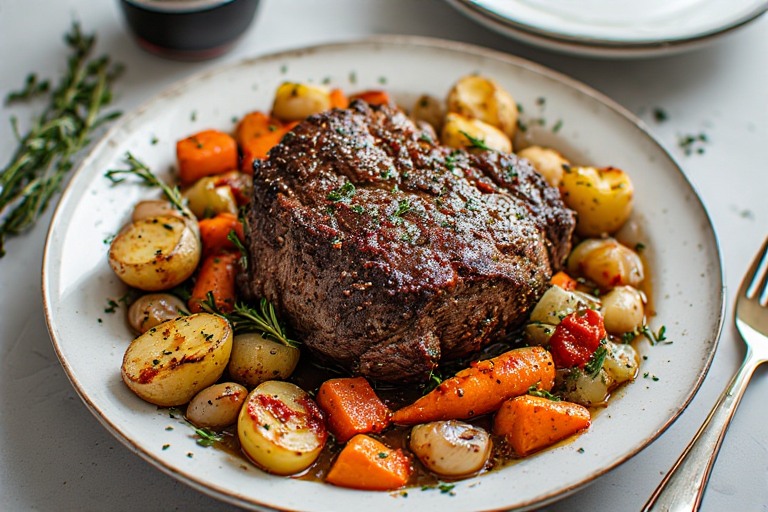
Slice or gently shred the pot roast and arrange it with the vegetables.
Spoon the rich sauce over everything and sprinkle with fresh chopped parsley.
Serve warm.
Serving Suggestions
This dish is wonderful on its own, but it also pairs beautifully with:
Buttery mashed potatoes
Crusty bread
Steamed green beans
Simple garden salad
The sauce is rich enough that you will want something to soak it up.
A Few Personal Tips
Chuck roast works best for this recipe because it becomes very tender during long cooking.
If the roast does not feel tender after the suggested cooking time, simply give it another 20 to 30 minutes in the oven. Tough cuts of beef reward patience.
The flavor is even better the next day, which makes this an excellent make ahead dinner.
Storage
Store leftovers in an airtight container in the refrigerator for up to 4 days.
Reheat gently on the stovetop with a little extra broth if needed. The meat will remain tender and the sauce will deepen in flavor overnight.
Pot roast also freezes very well. Store portions with sauce for up to 3 months and thaw overnight in the refrigerator before reheating.
It is one of those classic dinners that never really goes out of style. Simple ingredients, a little patience, and the reward is a meal that feels warm, generous, and deeply comforting.
Q&A
What cut of beef works best for pot roast?
Beef chuck roast is the best choice for pot roast. It has enough fat and connective tissue to become very tender during long, slow cooking. As it braises, the connective tissue breaks down and creates rich flavor and a silky texture in the sauce.
Why is the beef seared before braising?
Searing the beef creates a deep golden crust that adds a lot of flavor to the finished dish. The browned bits left in the pot during searing dissolve into the braising liquid, enriching the sauce as the roast cooks.
Can I skip the red wine?
Yes, if you prefer not to use wine. You can replace it with additional beef broth. A small splash of balsamic vinegar or a squeeze of tomato paste can help add some depth if the wine is omitted.
Why is the roast cooked slowly at a low temperature?
Tough cuts of beef like chuck roast need time for the connective tissue to break down. Slow cooking at a low temperature allows the meat to become fork-tender while developing deep flavor in the broth.
When do I know the pot roast is done?
The roast is ready when the meat easily pulls apart with a fork. If it still feels firm or difficult to shred, it simply needs more cooking time. Adding another 20–30 minutes in the oven usually solves this.
Why are the potatoes and carrots added later in the cooking process?
Vegetables cook faster than the beef. Adding them later prevents them from becoming overly soft or falling apart during the long braising time.
Can this recipe be made in a slow cooker?
Yes. After searing the beef and sautéing the vegetables, transfer everything to a slow cooker. Cook on low for about 7–8 hours or until the meat becomes very tender.
How can I thicken the sauce?
The sauce can be thickened by mixing butter and flour together to form a paste (called a beurre manié) and whisking it into the simmering liquid. Let it cook for a few minutes until the sauce reaches the desired consistency.
What vegetables work well in pot roast?
Classic vegetables include carrots, potatoes, onions, and celery. You can also add parsnips, turnips, mushrooms, or pearl onions depending on your preference.
Can I make pot roast ahead of time?
Yes, pot roast is an excellent make-ahead meal. In fact, the flavors often deepen overnight as the meat rests in the sauce. Simply reheat gently before serving.
How should leftovers be reheated?
Reheat the pot roast slowly on the stovetop over low heat with a small splash of beef broth or water to loosen the sauce. This helps keep the meat tender and prevents the sauce from becoming too thick.
Can pot roast be frozen?
Yes. Pot roast freezes very well. Store the meat and vegetables with some of the sauce in airtight containers for up to 3 months. Thaw overnight in the refrigerator before reheating.
What are the best side dishes to serve with pot roast?
Pot roast pairs well with comforting sides such as mashed potatoes, crusty bread, steamed green beans, or a simple salad. These help balance the richness of the dish and soak up the flavorful sauce.
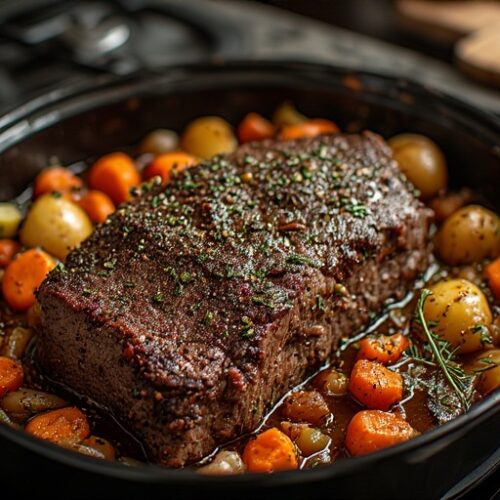
Slow Braised Garlic Herb Pot Roast with Vegetables

Equipment
- Dutch oven or heavy oven-safe pot
- tongs
- cutting board
- chef’s knife
- wooden spoon
Ingredients
- 3–3.5 lb beef chuck roast
- 2 tsp kosher salt
- 1 tsp freshly ground black pepper
- 1 tsp paprika
- 1 tsp dried thyme
- 1 tsp dried rosemary
- 2 tbsp olive oil
- 1 large yellow onion, sliced
- 3 carrots, cut into large pieces
- 2 celery stalks, chopped
- 5 cloves garlic, smashed
- 2 tbsp tomato paste
- 2 cups beef broth
- 1 cup dry red wine
- 2 tsp Worcestershire sauce
- 2 bay leaves
- 4 medium Yukon gold potatoes, peeled and cut into chunks
- 2 carrots, cut into thick pieces
- 2 tbsp butter
- 1 tbsp flour (optional, for thickening)
- 2 tbsp fresh parsley, chopped
Instructions
- Remove the beef from the refrigerator about 20 minutes before cooking. Pat the roast dry with paper towels and season all sides with salt, black pepper, paprika, thyme, and rosemary.
- Preheat the oven to 160°C (325°F). Heat olive oil in a large Dutch oven over medium-high heat. Sear the roast for about 4–5 minutes on each side until a deep golden crust forms, then remove and set aside.
- In the same pot, add the sliced onion, carrots, and celery. Cook for 5–6 minutes until they begin to soften. Add the smashed garlic and cook for another minute, then stir in the tomato paste and cook briefly to deepen the flavor.
- Pour in the red wine and scrape the bottom of the pot with a wooden spoon to release the browned bits. Let the wine simmer for about 3 minutes to reduce slightly.
- Add the beef broth, Worcestershire sauce, and bay leaves. Return the seared roast to the pot so the liquid comes about halfway up the meat. Bring the mixture to a gentle simmer.
- Cover the pot and transfer it to the oven. Braise for about 2 hours. Add the potatoes and additional carrots, spooning some of the liquid over them, then return the pot to the oven and cook another 1–1½ hours until the beef is fork-tender.
- Remove the roast and vegetables to a serving platter. If a thicker sauce is desired, simmer the liquid on the stove and whisk in a paste made from butter and flour. Cook for 2–3 minutes until slightly thickened and adjust seasoning if needed.
- Slice or gently shred the pot roast and arrange it with the vegetables. Spoon the sauce over the top and sprinkle with fresh chopped parsley before serving warm.