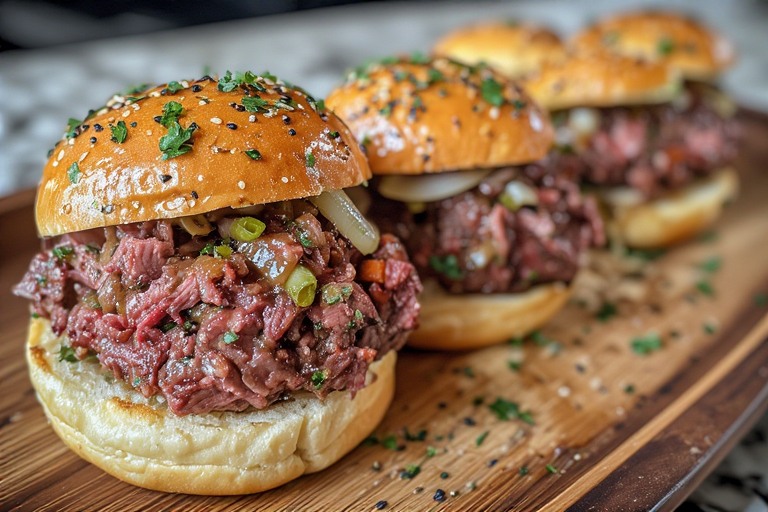
Every year I tell myself I am going to keep St Patrick’s Day simple, and every year I end up making something that takes three days and a small amount of patience. This recipe is one of those. It is not your standard corned beef and cabbage situation. This uses beef cheeks, cured at home, slow braised in Irish stout, and tucked into soft little buns with a bright pickled slaw.
It is cozy, deeply savory, and just a little bit special. Perfect for a small gathering where you want people to ask, “Wait, what is in this?”
Ingredients (Makes about 12 sliders)
For the Corned Beef Cheeks
2½ lbs beef cheeks, trimmed
1 tablespoon pink curing salt
2 tablespoons kosher salt
2 tablespoons brown sugar
1 teaspoon cracked black pepper
1 teaspoon mustard seeds
1 teaspoon coriander seeds
2 bay leaves
3 cloves garlic, crushed
4 cups Irish stout such as Guinness Draught
1 onion, chopped
1 carrot, chopped
1 celery stalk, chopped
For the Guinness Caramelized Onion Butter
2 large yellow onions, thinly sliced
2 tablespoons butter
½ cup Guinness Draught
½ cup unsalted butter, softened
Pinch of salt
For the Pickled Slaw
1 cup thinly sliced ramps or green onions
½ cup shredded green cabbage
¼ cup apple cider vinegar
1 tablespoon sugar
Pinch of salt
For Assembly
12 mini potato slider buns
Whole grain mustard
Fresh parsley, chopped
Instructions
1. Cure the Beef
In a bowl, mix together the curing salt, kosher salt, brown sugar, pepper, mustard seeds, coriander, bay leaves, and garlic.
Rub the mixture all over the beef cheeks. Place them in a covered container in the refrigerator for 3 to 5 days, turning once a day. It feels like a commitment, and it is, but this is where the flavor really develops.
When you are ready to cook, rinse the beef thoroughly under cold water.
2. Braise
Preheat your oven to 160°C (325°F).
Place the cured beef cheeks in a Dutch oven with the onion, carrot, and celery. Pour in the stout until the meat is mostly covered.
Cover and braise for 3½ to 4 hours, until the beef is fork tender and almost silky. Let it rest slightly, then shred or slice into thick pieces.
3. Make the Guinness Onion Butter
In a skillet over medium low heat, cook the sliced onions in 2 tablespoons butter for 25 to 30 minutes. Stir occasionally and let them slowly turn deep golden brown.
Add the stout and simmer until thick and almost jammy. Let it cool completely, then fold into the softened butter with a pinch of salt. Refrigerate until slightly firm but still spreadable.
4. Prepare the Pickled Slaw
In a bowl, stir together the vinegar, sugar, and salt. Toss with the sliced ramps and cabbage. Let it sit for at least 30 minutes so the flavors soften and brighten.
5. Assemble
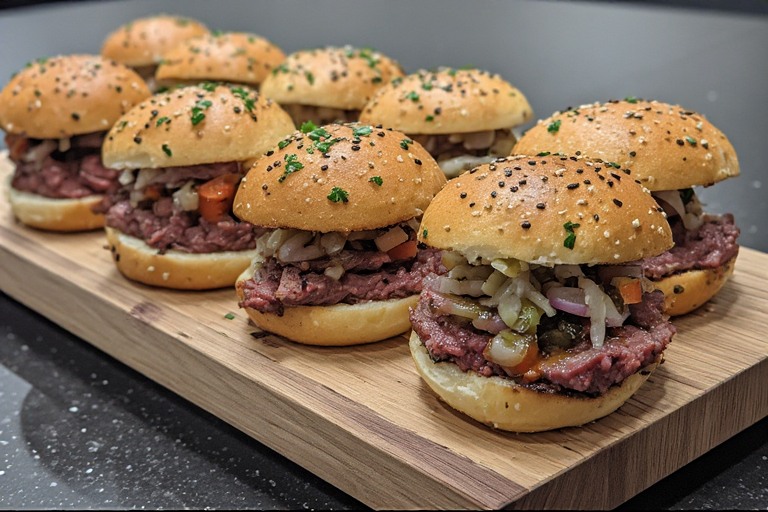
Lightly toast the slider buns. Spread a generous layer of Guinness onion butter on both sides.
Add a mound of shredded beef cheek, then a spoonful of pickled slaw. Finish with a small dab of whole grain mustard and a sprinkle of fresh parsley.
A Few Personal Tips
Beef cheeks need time. Do not rush the braise. If they are not tender, they are not ready.
The onion butter can be made a day ahead, which honestly makes hosting easier.
Leftover beef is wonderful on mashed potatoes the next day, if you are lucky enough to have any.
Storage
Store leftover beef in an airtight container in the refrigerator for up to 3 days. Reheat gently with a splash of broth or stout to keep it moist.
These sliders take a little patience, but they are the kind of recipe people remember. And if I am already cooking for a holiday, I would rather lean all the way in than do it halfway.
Q&A
What makes this recipe different from traditional corned beef?
Traditional corned beef is usually made from brisket that has been commercially cured. This recipe uses beef cheeks that are cured at home and then slowly braised in Irish stout. The result is a richer, more tender texture with deeper flavor.
Why use beef cheeks instead of brisket?
Beef cheeks are a working muscle with a lot of connective tissue. When cooked slowly, that tissue breaks down and becomes incredibly tender and silky. They absorb braising flavors beautifully, making them ideal for slow-cooked dishes like this.
What is pink curing salt and why is it used?
Pink curing salt contains sodium nitrite and is used to preserve meat and give corned beef its characteristic flavor and color. It also helps prevent bacterial growth during the curing process. It should be used in the correct measured amount and is not the same as regular table salt.
Is it possible to skip the curing step?
Technically yes, but the flavor will be different. Without curing, the beef cheeks would simply be braised beef rather than corned beef. The curing process adds the distinctive savory and slightly spiced flavor associated with traditional corned beef.
Why does the beef need to cure for several days?
The curing time allows the salt, spices, and curing agents to penetrate the meat. This process not only develops flavor but also changes the texture slightly, creating the classic corned beef profile.
Why should the beef be rinsed after curing?
Rinsing removes excess salt and surface curing mixture. This keeps the final dish from becoming overly salty while still preserving the flavor developed during curing.
What does the Irish stout add to the braise?
Irish stout contributes a deep, malty richness with subtle bitterness. As the meat cooks, the stout helps create a flavorful braising liquid that enhances the savory depth of the beef.
Why cook the onions slowly for the butter?
Slow caramelization allows the onions to develop natural sweetness and deep golden color. This slow cooking process creates a rich base that pairs perfectly with the stout and balances the savory beef.
Can the Guinness onion butter be made in advance?
Yes. It can be made a day or two ahead and stored in the refrigerator. In fact, letting it rest overnight often deepens the flavor and makes hosting easier.
What is the purpose of the pickled slaw?
The pickled slaw adds brightness and acidity, which cuts through the richness of the beef and onion butter. The crunchy texture also provides contrast to the tender meat.
Can other cuts of beef be used if beef cheeks are unavailable?
Yes. Short ribs, chuck roast, or brisket can be used as substitutes. However, cooking times and textures may vary slightly.
Can the beef be prepared ahead of time?
Absolutely. The braised beef can be made a day in advance and reheated gently in its cooking liquid. Many slow-braised dishes actually taste even better the next day as the flavors develop.
How should leftover beef be used?
Leftover beef works well in sandwiches, tacos, or served over mashed potatoes. It can also be added to soups or hash for another meal.
How long can leftovers be stored?
Cooked beef can be stored in an airtight container in the refrigerator for up to 3 days. Reheat gently with a splash of broth or stout to keep the meat moist and tender.
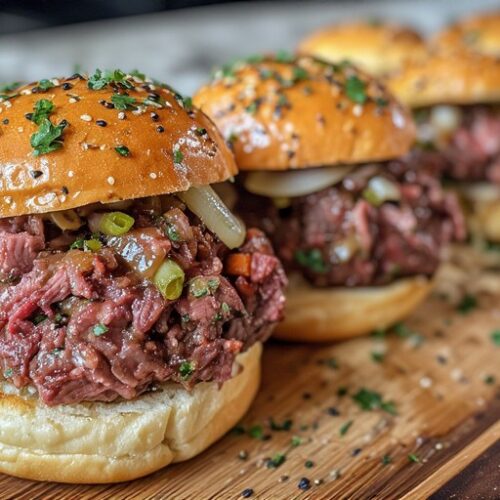
Irish Stout–Braised Corned Beef Cheek Sliders

Equipment
- mixing bowl for curing mixture
- covered container for refrigerating beef during curing
- Dutch oven for braising
- oven
- skillet for caramelizing onions
- cutting board
- knife
Ingredients
- 2.5 lbs beef cheeks, trimmed
- 1 tbsp pink curing salt
- 2 tbsp kosher salt
- 2 tbsp brown sugar
- 1 tsp cracked black pepper
- 1 tsp mustard seeds
- 1 tsp coriander seeds
- 2 bay leaves
- 3 cloves garlic, crushed
- 4 cups Irish stout such as Guinness Draught
- 1 onion, chopped
- 1 carrot, chopped
- 1 celery stalk, chopped
- 2 large yellow onions, thinly sliced
- 2 tbsp butter
- 0.5 cup Guinness Draught
- 0.5 cup unsalted butter, softened
- 1 pinch salt
- 1 cup thinly sliced ramps or green onions
- 0.5 cup shredded green cabbage
- 0.25 cup apple cider vinegar
- 1 tbsp sugar
- 1 pinch salt
- 12 mini potato slider buns
- whole grain mustard, for serving
- fresh parsley, chopped, for garnish
Instructions
- In a bowl, mix together the curing salt, kosher salt, brown sugar, pepper, mustard seeds, coriander, bay leaves, and garlic. Rub this mixture all over the beef cheeks. Place them in a covered container in the refrigerator for 3 to 5 days, turning once a day. When ready to cook, rinse the beef thoroughly under cold water.
- Preheat your oven to 325°F (160°C). Place the cured beef cheeks in a Dutch oven with the onion, carrot, and celery. Pour in the stout until the meat is mostly covered. Cover tightly and braise for 3½ to 4 hours, until the meat is fork tender and silky. Let rest slightly, then shred or slice.
- In a skillet over medium low heat, cook the sliced onions in 2 tablespoons butter for 25 to 30 minutes, stirring occasionally, until deep golden brown. Add the stout and simmer until thick and syrupy. Let cool, then fold into the softened butter with a pinch of salt. Chill until firm.
- Mix the vinegar, sugar, and salt in a bowl. Toss with the sliced ramps and cabbage. Let sit for at least 30 minutes until slightly softened and bright.
- Lightly toast the slider buns. Spread Guinness onion butter on both sides. Add shredded beef cheek, then pickled slaw. Finish with whole grain mustard and fresh parsley. Serve warm.