A Cozy, Slow-Cooked Dinner That Feels Like a Real Supper
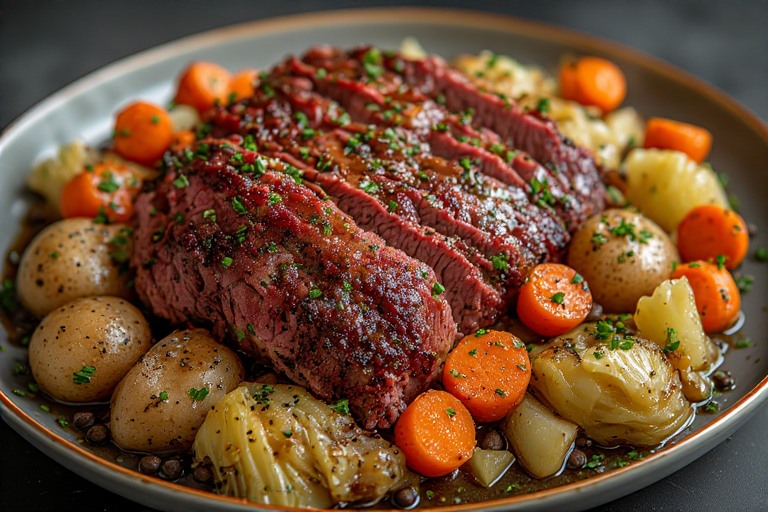
Homemade corned beef and cabbage is one of those meals that brings a whole table together. It is hearty, comforting, and full of the kind of flavor that only comes from letting simple ingredients cook low and slow. The beef turns beautifully tender, the carrots soak up all that savory broth, and the cabbage softens just enough while still holding its shape.
This is the sort of dinner that feels just right for St. Patrick’s Day, a Sunday family meal, or any chilly evening when you want something warm and substantial. It looks impressive when you bring it to the table, but the slow cooker does most of the work for you, which is always welcome.
What makes this version especially nice is the layering of flavor. The corned beef gets a quick sear first, which gives the finished dish a richer taste. Then it simmers slowly with broth, mustard, garlic, onion, herbs, and spices until it is tender enough to slice. The carrots go in later so they stay pleasantly firm instead of falling apart, and the cabbage gets a quick buttery sauté before finishing in the slow cooker. That little extra step gives it lovely flavor and keeps it from tasting flat.
By the time everything is ready, you have a full platter of tender meat and vegetables that feels generous, old-fashioned, and deeply satisfying. Add roasted potatoes and a spoonful of horseradish sauce on the side, and you have a dinner that checks every box.
Why You’ll Love This Recipe
This recipe has so much going for it, especially if you love a meal that feels special without asking you to be tied to the kitchen all day.
First, it is deeply flavorful. Corned beef already brings plenty of savory character, but searing it and cooking it with mustard, garlic, onion, thyme, bay leaves, peppercorns, and celery seed gives the broth a fuller, more rounded taste.
Second, it is a wonderfully practical dinner. The slow cooker takes care of the long cooking time, which means you can get on with your day while dinner quietly cooks away.
It is also a complete meal with very little fuss. You have tender beef, soft cabbage, sweet carrots, and potatoes for serving, so there is no scrambling to figure out what else to put on the table.
And finally, the leftovers are excellent. Cold or reheated, corned beef is one of those things that somehow gets even better the next day. Tuck it into sandwiches, crisp it up in a skillet with potatoes, or save it for a quick lunch you will actually look forward to.
Ingredients
For the corned beef
- 4 pounds corned beef
- 2 tablespoons oil
- 1 3/4 cups broth
- 3 1/2 tablespoons mustard
- 6 garlic cloves, smashed
- 1 onion
- 20 peppercorns
- 10 sprigs fresh thyme
- 2 bay leaves
- 1/4 teaspoon celery seed
For the vegetables
- 2 pounds carrots, peeled and cut into 3-inch diagonal chunks
- 1 head cabbage, sliced into 8 thick wedges with the core intact
- 1/2 cup butter
- 1 1/2 teaspoons salt
For serving
- Roasted potatoes
- Horseradish sauce
- Fresh parsley, finely chopped
- Fresh chives
Ingredient Notes
Corned beef
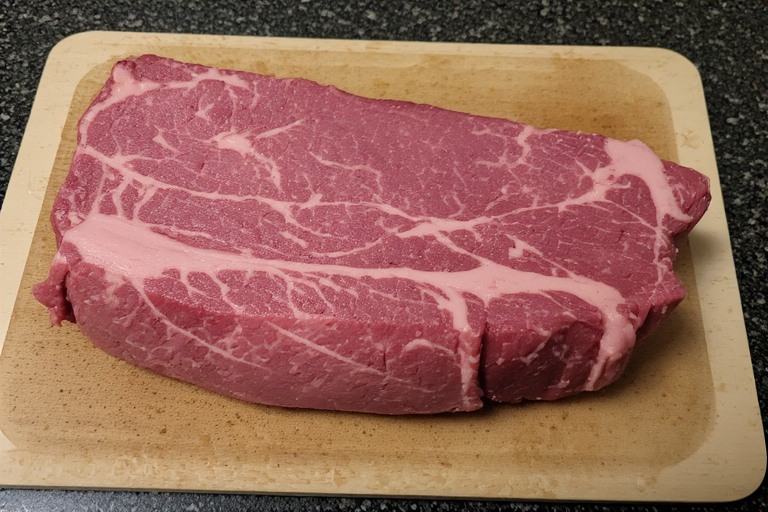
Either flat cut or point cut works here. Flat cut is usually the better choice if you want neat slices for serving. Point cut has more marbling and tends to be a little richer. Both will turn out delicious, so use whichever you prefer or whichever looks best at the store.
Broth
Beef broth gives the deepest flavor, but chicken broth also works nicely. Even vegetable broth will do in a pinch. Since the corned beef is already salty, you may want to use a lower-sodium broth if you have one.
Mustard
This adds a little tang and depth to the braising liquid. Dijon, yellow, spicy brown, or whole grain mustard can all work. It does not make the dish taste strongly mustardy. It simply rounds everything out.
Cabbage
Green cabbage is classic and holds together well during cooking. Be sure to keep the wedges thick and leave part of the core intact so they do not fall apart in the pan or the slow cooker.
Butter
A generous amount of butter helps the cabbage soften and caramelize just a bit before it goes into the slow cooker. That one step adds a lot of flavor to the finished dish.
Kitchen Tips Before You Begin
Patting the corned beef dry before searing makes a real difference. Moisture on the surface can keep the meat from browning well, and browning is where you build some of that extra flavor.
Do not skip scraping up the browned bits from the skillet after searing. Those little bits are packed with flavor and become part of the broth that seasons the whole meal.
Try not to add the carrots too early. They need much less time than the beef, and adding them later helps them stay tender without turning mushy.
When slicing the finished corned beef, always cut against the grain. This shortens the muscle fibers and gives you slices that are tender instead of stringy and chewy.
How to Make Homemade Corned Beef and Cabbage
Step 1: Prepare and sear the corned beef
Start by patting the corned beef dry with paper towels. This is a simple step, but it helps the surface brown better in the skillet.
Heat the oil in a large skillet over medium-high heat. Once the oil is hot, add the corned beef and sear it for 2 to 4 minutes per side, until it develops a nice browned crust. You are not trying to cook it through here. You are just adding color and flavor.
Once it is browned, transfer the corned beef to the slow cooker.
Step 2: Build the braising liquid
Using the same skillet, pour in the broth and stir in the mustard. As it heats, scrape up all the browned bits from the bottom of the pan. Bring the mixture to a boil, then pour it over the corned beef in the slow cooker.
This step makes sure none of that flavor gets left behind in the pan.
Step 3: Add the aromatics
Add the smashed garlic, onion, peppercorns, thyme sprigs, bay leaves, and celery seed to the slow cooker.
Cover and cook on low for 6 to 7 hours. During this time, the corned beef will slowly become tender and flavorful. By the end of this stage, it should feel very tender when pierced with a fork.
Step 4: Add the carrots
After the beef has had its long head start, add the carrots around the meat in the slow cooker.
Cover again and continue cooking on low for 1 to 2 hours, or until the carrots are tender but not falling apart. This staggered timing is one of the best tricks in the recipe because it keeps the vegetables from overcooking.
Step 5: Sauté the cabbage
While the carrots are finishing, melt the butter in a large skillet over medium heat. Add the cabbage wedges and sprinkle them with the salt.
Cook for about 10 minutes, turning gently once or twice, until the cabbage begins to soften and gets a little golden color around the edges. You do not need to cook it completely through at this point. You just want to soften it slightly and give it some flavor before it joins everything else.
Step 6: Finish the cabbage in the slow cooker
Transfer the cabbage wedges to the slow cooker, nestling them around the meat and carrots.
Cover and cook on low for another 30 to 60 minutes, until the cabbage is tender and infused with the broth.
This final stage gives the cabbage a soft, savory finish without reducing it to mush.
Step 7: Rest the meat
Lift the corned beef out of the slow cooker and place it on a cutting board. Let it rest for about 10 minutes before slicing.
Resting helps the juices settle back into the meat, which gives you better slices and keeps the beef from drying out.
Step 8: Slice and serve
Slice the corned beef against the grain into thick slices.
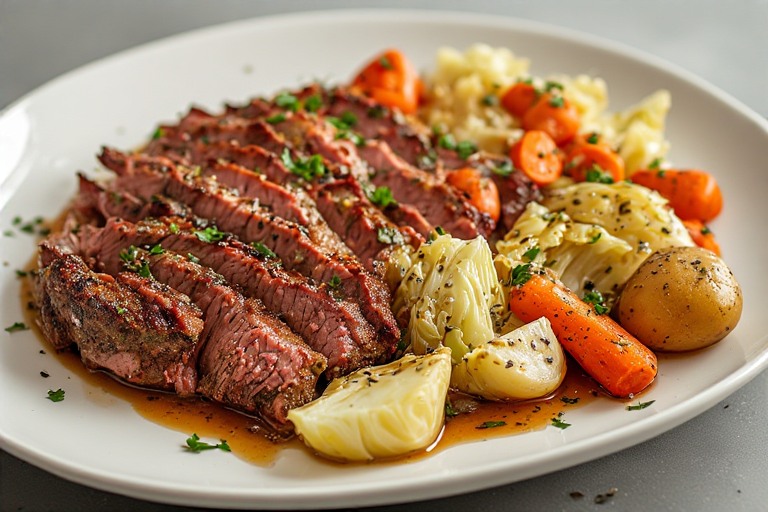
Arrange the beef on a serving platter with the carrots, cabbage, and roasted potatoes. Spoon a little of the cooking liquid over the top for extra moisture and flavor, then sprinkle with chopped parsley and fresh chives. Serve horseradish sauce on the side.
What to Expect as It Cooks
A recipe like this is wonderfully forgiving, but it helps to know what you are looking for along the way.
The beef should not be sliceable and firm after the first few hours. It needs that full low-and-slow cooking time to become tender. If it still feels tough, it most likely just needs more time.
The carrots should be fork-tender but still hold their shape. If they are falling apart, they have probably gone a little too long.
The cabbage should be soft and flavorful, but the wedges should still look like wedges when you lift them out. Keeping the core intact really helps with that.
The broth will be savory and aromatic, with a gentle tang from the mustard and a nice depth from the onion, garlic, and herbs.
Helpful Tips for Success
Keep the heat low
Corned beef does best with gentle cooking. High heat can make it tougher, while low heat gives the connective tissue time to break down properly.
Slice only when ready to serve
Leaving the meat whole until serving helps it stay juicy. Slice it too early and it can dry out more quickly.
Use a large enough slow cooker
You want enough room for the beef and vegetables to fit comfortably. Crowding too much can make it harder for everything to cook evenly.
Do not cut the cabbage too small
Large wedges are much easier to handle and serve. They also look much nicer on the platter.
Taste your sides before salting
Corned beef is naturally salty, so the vegetables and potatoes often need less salt than you might think once served together.
Easy Substitutions
This recipe is very flexible in a few spots, which is always helpful.
- Use beef broth, chicken broth, or vegetable broth
- Swap Dijon, yellow, spicy brown, or whole grain mustard
- Replace fresh thyme with dried thyme if needed
- Use parsnips or turnips in place of some of the carrots
- Try Savoy cabbage for a slightly more delicate texture
- Serve with mashed potatoes instead of roasted potatoes if that is your preference
What to Serve With Corned Beef and Cabbage
Roasted potatoes are a lovely choice because they add a crisp, golden element to a meal that is otherwise very soft and tender. Horseradish sauce is also classic and gives you that sharp little contrast that wakes everything up.
For bread, Irish soda bread or a simple crusty loaf would be excellent. Both are perfect for soaking up the flavorful broth.
If you want something fresh on the table, a crisp green salad with a tangy vinaigrette balances the richness nicely. Pickles or quick-pickled onions also work well if you enjoy a bright, acidic bite alongside hearty meat.
Leftovers You’ll Be Happy to Have
This is one of those meals that feels like a gift the next day.
Leftover corned beef makes wonderful sandwiches, especially on rye bread with mustard. It is also delicious chopped up and crisped in a skillet with potatoes and onions for an easy hash.
You can fold it into scrambled eggs, tuck it into a wrap, or warm it gently and serve it over leftover potatoes for a second simple dinner.
The vegetables can be reheated right alongside the meat, or chopped and mixed into hash if you want to use everything up in one pan.
Storage Tips
Store the corned beef and vegetables in airtight containers in the refrigerator for up to 4 days.
For the best texture, keep a little of the cooking liquid with the meat so it stays moist during storage and reheating.
To reheat, place the corned beef in a covered baking dish with a splash of broth and warm it in a 300°F oven until heated through. You can also reheat slices gently in a skillet over low heat with a spoonful of broth.
The cabbage and carrots can be reheated in the microwave or in a skillet with a bit of butter.
Freezing Instructions
Corned beef freezes much better than the vegetables. If you want to freeze some for later, slice the meat first and wrap it well or place it in a freezer-safe container with a little broth to help protect it from drying out.
Freeze for up to 3 months.
The cabbage and carrots are best enjoyed fresh or from the refrigerator because they tend to soften quite a bit after freezing and thawing.
How to Make It Vegan
A vegan version of this meal can still be very cozy and satisfying. The flavor will be different, of course, but the overall feel of the meal can stay very much the same.
For the main protein
Use one of these in place of the corned beef:
- A seitan roast
- Store-bought vegan corned beef
- Extra-firm tofu, cut into thick slabs
- Large portobello mushrooms for a lighter option
For the braising liquid
Use vegetable broth, mustard, garlic, onion, peppercorns, thyme, bay leaves, and celery seed just as you would in the original. A splash of soy sauce or tamari can help bring in a deeper savory note.
For the cabbage
Use vegan butter or olive oil instead of regular butter.
For serving
Pair it with roasted potatoes and a dairy-free horseradish sauce or mustard on the side.
If using tofu, pressing it first will help it hold together better and absorb more flavor. If using seitan, treat it much like the corned beef and let it warm slowly in the broth so it can pick up all that seasoning.
Frequently Asked Questions
Do I really need to sear the corned beef first?
You do not have to, but it adds extra flavor and gives the finished dish a richer taste. If you are short on time, the recipe will still work without it, but the sear is worth doing when you can.
Why is my corned beef still tough?
It usually just needs more time. Corned beef can be surprisingly firm until it reaches that point where the connective tissue has had time to break down. Keep cooking on low and check it again later.
Why do the carrots go in later?
Because they cook much faster than the meat. Adding them too early can leave you with very soft, mushy carrots by the time the beef is done.
Can I put the cabbage in at the beginning?
You can, but it will be much softer and more broken down by the end. Adding it near the end helps it keep some structure and gives you a prettier finished dish.
What is the best cut of corned beef for this recipe?
Flat cut is best if you want clean, even slices. Point cut is more marbled and a little richer. Both are delicious, so it really comes down to your preference.
Can I make this ahead of time?
Yes, and it reheats beautifully. You can cook it a day ahead, store everything with some of the broth, and reheat gently before serving.
What do I do if the dish tastes too salty?
Corned beef can vary in saltiness. Serving it with unsalted or lightly seasoned potatoes helps balance things out. You can also spoon the broth lightly over the top instead of drenching everything.
Can I cook this in the oven instead of a slow cooker?
Yes, though the method will need some adjustment. A covered Dutch oven at a low temperature works well for braising corned beef, then you can add the vegetables later so they do not overcook.
What goes best with horseradish sauce?
A little horseradish sauce is especially good with the sliced corned beef and potatoes. It adds a sharp, creamy contrast that brightens the whole plate.
Final Thoughts
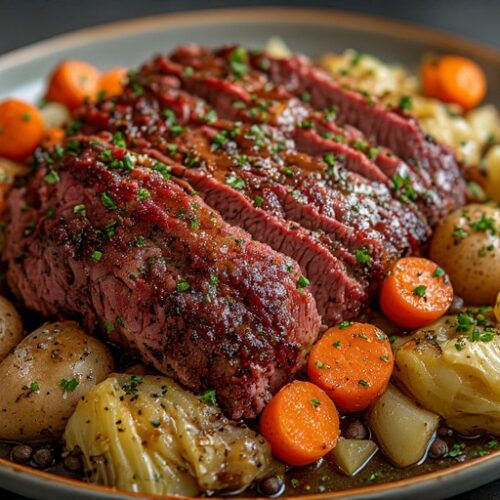
This homemade corned beef and cabbage is the kind of meal that feels generous from the very first look at the platter. It has all the comfort of a traditional supper, with tender slices of beef, sweet carrots, soft cabbage, and potatoes ready to catch every bit of that savory broth.
It is not fussy, it feeds plenty, and it gives you leftovers worth saving. That is always a good kind of recipe to keep around.
Homemade Corned Beef and Cabbage

Equipment
- slow cooker
- large skillet
- tongs
- cutting board
- knife
- serving platter
Ingredients
- 4 pounds corned beef
- 2 tablespoons oil
- 1 3/4 cups broth
- 3 1/2 tablespoons mustard
- 6 cloves garlic, smashed
- 1 onion
- 20 peppercorns
- 10 sprigs fresh thyme
- 2 bay leaves
- 1/4 teaspoon celery seed
- 2 pounds carrots, peeled and cut into 3-inch diagonal chunks
- 1 head cabbage, sliced into 8 thick wedges with the core intact
- 1/2 cup butter
- 1 1/2 teaspoons salt
- roasted potatoes, for serving
- horseradish sauce, for serving
- fresh parsley, finely chopped, for serving
- fresh chives, for serving
Instructions
- Pat the corned beef dry with paper towels. Heat the oil in a large skillet over medium-high heat, then sear the corned beef for 2 to 4 minutes per side until browned. Transfer it to the slow cooker.
- In the same skillet, pour in the broth and stir in the mustard. Scrape up all the browned bits from the bottom of the pan, bring the mixture to a boil, then pour it over the corned beef in the slow cooker.
- Add the smashed garlic, onion, peppercorns, thyme sprigs, bay leaves, and celery seed to the slow cooker. Cover and cook on low for 6 to 7 hours, until the corned beef is very tender.
- Add the carrots around the meat in the slow cooker. Cover again and continue cooking on low for 1 to 2 hours, until the carrots are tender but not falling apart.
- While the carrots finish cooking, melt the butter in a large skillet over medium heat. Add the cabbage wedges, sprinkle with the salt, and cook for about 10 minutes, turning gently once or twice, until slightly softened and lightly golden around the edges.
- Transfer the cabbage wedges to the slow cooker, nestling them around the meat and carrots. Cover and cook on low for another 30 to 60 minutes, until the cabbage is tender and infused with the broth.
- Lift the corned beef out of the slow cooker and place it on a cutting board. Let it rest for about 10 minutes before slicing.
- Slice the corned beef against the grain into thick slices. Arrange the beef on a serving platter with the carrots, cabbage, and roasted potatoes. Spoon a little cooking liquid over the top, then sprinkle with chopped parsley and fresh chives. Serve with horseradish sauce on the side.